Beyond PM Craft Skills: Human Skills for Next-Level Growth
This was one of the talks I was most nervous to give — and most proud of.
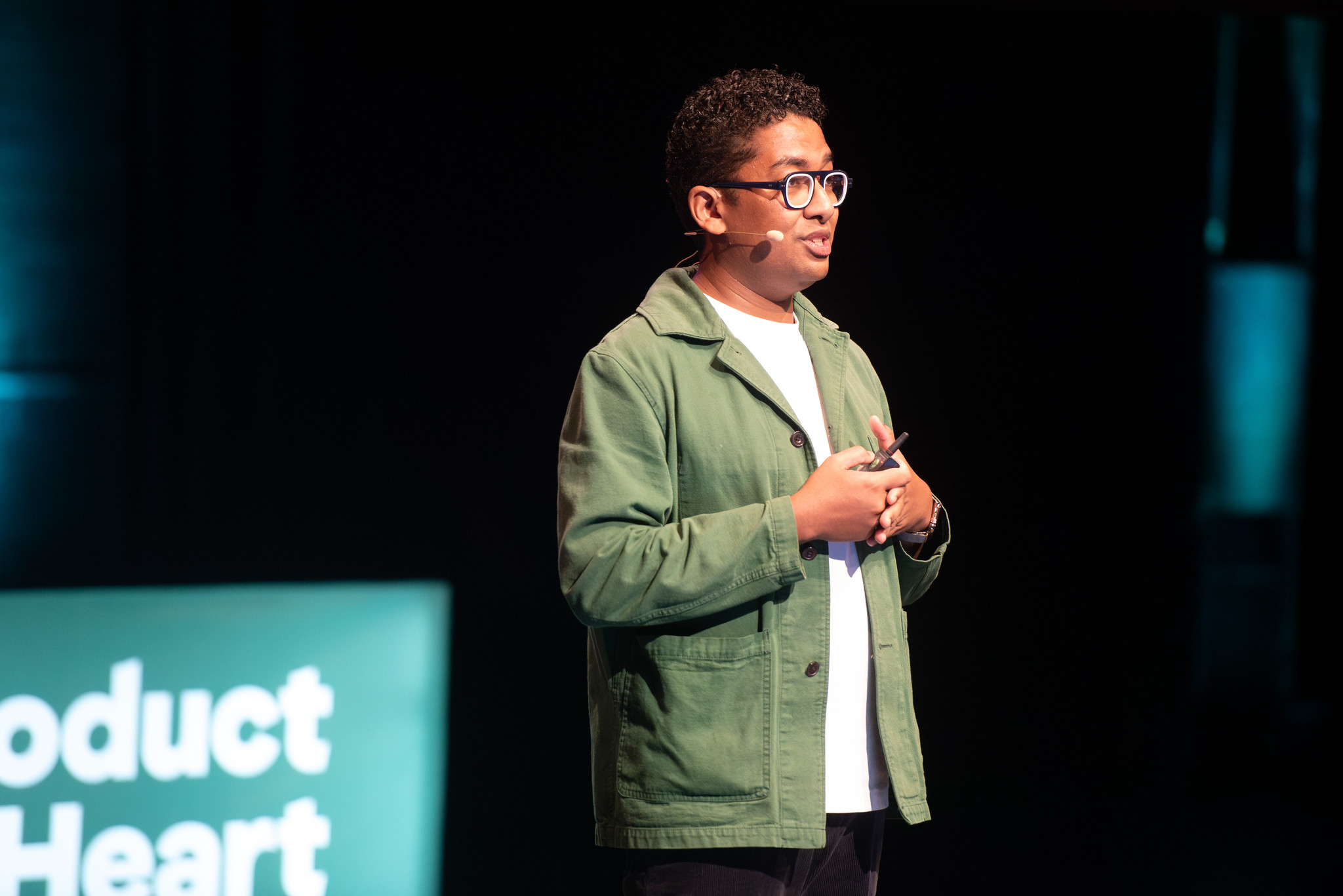
Product at Heart in Hamburg is a conference I admire because it goes beyond the usual playbook-and-metrics conversation. So when I had the chance to speak there in 2024, I wanted to bring something that matched the spirit of the event: a talk about the stuff product people rarely say out loud.
The premise started with a question I had been sitting with for a while: what actually separates the product leaders who grow effortlessly from those who plateau? The honest answer, in my experience, is rarely about frameworks or feature-writing ability. It is about what goes on underneath.
The Stanford signal
For 45 years, the most popular course at Stanford Business School has been called "Touchy Feely" — officially, Interpersonal Dynamics. Not product strategy. Not financial modelling. Self-awareness, emotional honesty, and the quality of human connection in professional settings.
Steve Jobs reportedly cited interpersonal feedback as one of the most formative experiences of his career. Satya Nadella has spoken extensively about empathy as a leadership discipline. Shreyas Doshi's most resonant writing is almost never about frameworks — it is about inner states, self-worth, and the psychology of people who build products. The pattern is there if you look for it.
Three keys
I structured the talk around three frameworks that have genuinely changed how I operate — not as abstract concepts, but as daily practice.
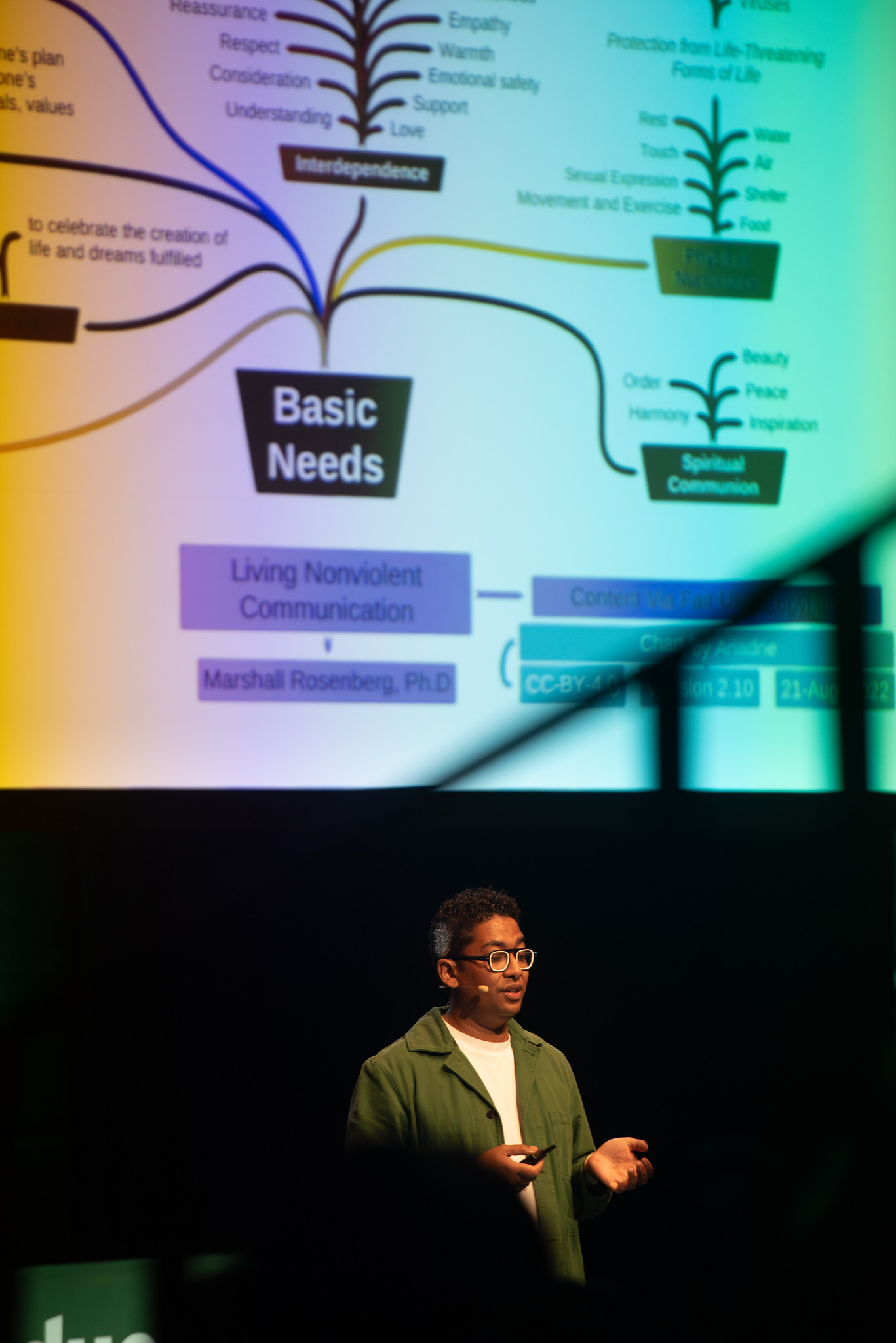
Nonviolent Communication (NVC), developed by Marshall Rosenberg, gave me a language for conflict that I did not have before. The model — observations, feelings, needs, requests — sounds simple until you try to use it in a tense stakeholder meeting. What it actually teaches is that most conflict is need conflict, not value conflict. When you can name the need behind the frustration, the conversation transforms.
Internal Family Systems (IFS) treats the mind as a system of parts — the inner critic, the people-pleaser, the perfectionist — each with a protective function. For product managers, who are constantly mediating between competing forces external to them, learning to do the same work internally is surprisingly useful.
Humility — the third key — is the one I almost cut because it felt too obvious. But the more I spoke to peers, the more I realised it is treated as a virtue rather than a practice. Humility as a practice means actively seeking disconfirmation. Updating your priors in public. Saying "I was wrong" without it costing you your sense of identity.
What the room felt like
The conversation after the talk was the kind that makes you want to keep doing this. People came up to share their own experiences with NVC, with therapy, with feeling like the human dimension of their career had no space in professional contexts.
That is the gap this talk tries to address. Not that craft skills do not matter — they do — but that the ceiling for most product people is not technical. It is human. And the good news is that it is also the most moveable ceiling.